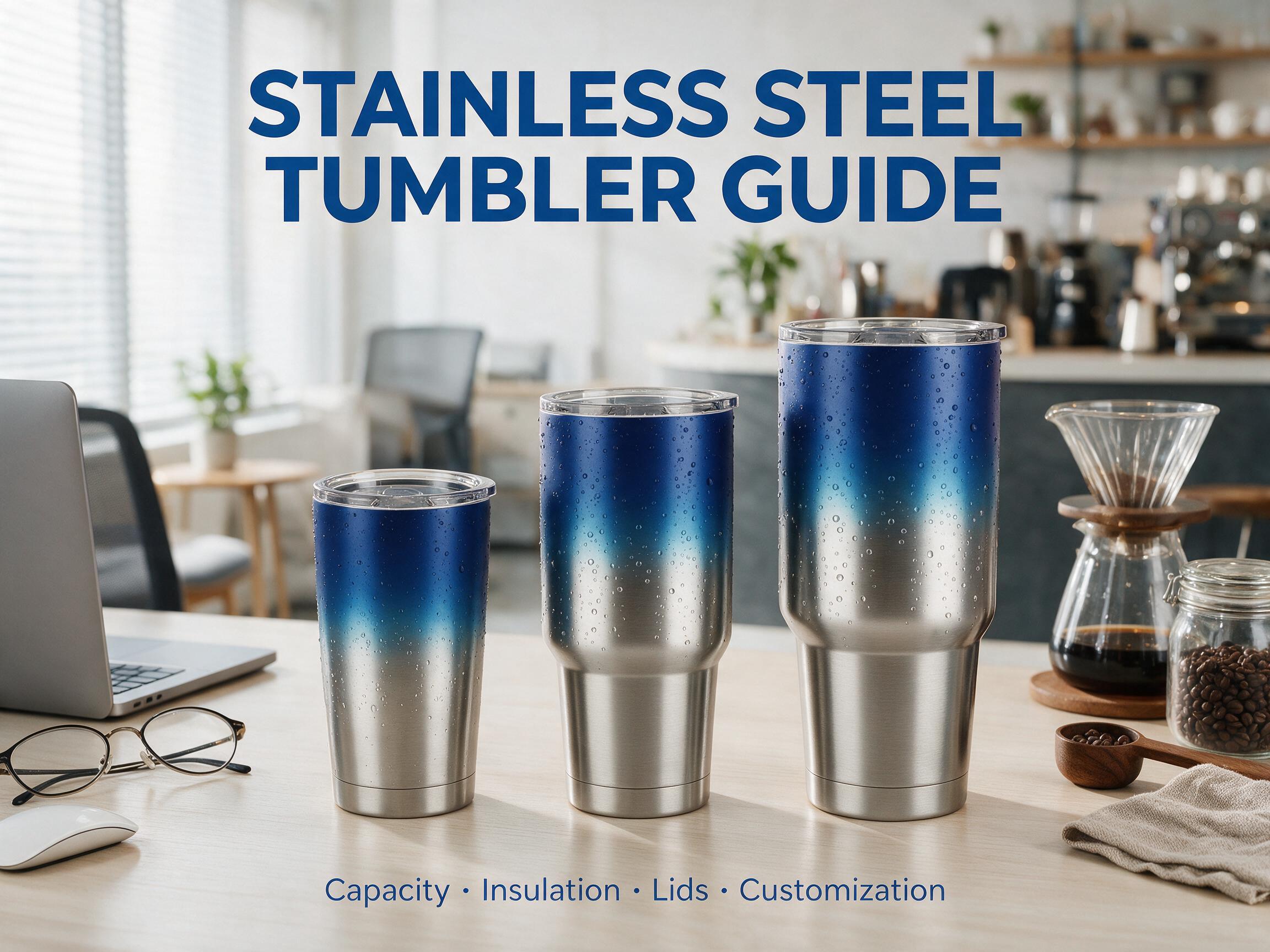
The stainless steel tumbler has quietly become one of those objects that's everywhere once you start noticing. Office desks, car cup holders, kitchen counters, patios — it's replaced the ceramic mug for morning coffee, the plastic cup for afternoon water, and the wine glass for evening drinks on the deck. And the reason is simple: a well-made tumbler does what a bottle can't and what a glass won't.
It gives you the open, natural drinking experience of a cup but with the temperature control of a vacuum flask, and it does it in something that won't shatter on tile or leach chemicals into your drink. But not all tumblers are created equal, and the differences show up in ways that matter every single time you use one.
What You're Actually Getting
A tumbler is a straight-sided drinking vessel with no handle — wider than a bottle and meant for drinking directly rather than pouring. The stainless steel version works because of double-wall vacuum insulation: an inner and outer wall of 18/8 (304) or 18/10 (316) food-grade steel with the air between them pulled out. No air means no conductive or convective heat transfer, and a copper or reflective coating on the inner wall handles the radiative side. The result is a cup that keeps cold drinks icy for 24 hours and hot drinks steaming for 12 or more.
But performance isn't binary — not all vacuum-insulated tumblers deliver the same results. Three things actually determine what happens in the real world: the quality of the vacuum itself (measured in pressure, not marketing copy), the wall thickness, and whether there's a copper radiation barrier on the inner wall. A tumbler with a true high-vacuum gap and a copper-coated inner wall will outlast a cheaper alternative by several hours in both hot and cold retention. When you're comparing options, look for manufacturers that publish third-party test data instead of best-case figures pulled from a single lab run under ideal conditions.
The Types That Matter
While the basic shape stays consistent, tumblers are tuned for specific drinks in ways that matter more than you'd think. Water and everyday tumblers run 20 oz to 30 oz and almost always come with a straw lid — they're your all-day hydration workhorse and the most common configuration sold. Coffee and tea tumblers shrink down to 12 oz to 16 oz with a slider or press-in lid that controls heat loss and keeps things from sloshing in the car. Wine tumblers are stemless, typically 12 oz, and maintain serving temperature without any chance of a shattered glass on the patio. Beer and cocktail tumblers at 16 oz to 20 oz have a slightly tapered rim that helps keep carbonation and aroma where they belong. And travel tumblers are the ones designed to actually fit a standard car cup holder, usually with a tapered base and a leak-resistant lid.
Size and Sip — Getting Capacity and Lids Right
Choosing the right capacity is mostly about matching the beverage to how long someone goes between refills. A 12 oz tumbler is perfect for an espresso-based drink or a single pour of wine — it's what you reach for when you're not planning to nurse the same drink for hours. The 20 oz size is the everyday standard for water or coffee, big enough to get you through a morning without constant refills but still comfortable in one hand — and that matters, because tumblers don't have handles. The 30 oz is for long outdoor days, road trips, or anyone who just wants to fill it once and be done.
The lid is where the drinking experience lives or dies — it's the most functional part of a tumbler and the one most people don't think about until they're stuck with the wrong one. A straw lid lets you drink one-handed and is the obvious choice for water and cold drinks, but the straw creates a thermal bridge that costs you some insulation performance. A slider lid hits the sweet spot for hot drinks — good temperature retention, decent splash resistance, and easy to sip from. A press-in lid with a small drinking opening maximizes heat retention and is the commute-coffee classic. For anything going into a backpack or a bag, you want a fully sealed flip lid — it's the only one that won't betray you when the tumbler ends up sideways.
Making It Personal
Tumblers have become one of the most customized items in promotional drinkware for good reason: they offer a big, flat branding surface and a service life measured in years rather than months. Laser engraving produces a permanent metallic mark that's perfect for corporate programs and premium retail — it can't scratch off, and it ages beautifully. UV printing handles full-color graphics and photographic detail on curved surfaces for brands that need their full palette. Powder coating in any Pantone shade gives you a color-matched exterior that looks factory-original. And custom packaging rounds things out for brands that need a retail-ready product straight from the factory. For corporate gifting, the combination of a 20 oz tumbler with a laser-engraved logo remains the most consistently requested configuration across the industry.
Putting It All Together
Start with what's going in the tumbler and work outward from there. Coffee drinkers should prioritize a slider or press-in lid in a 16 oz body. Water calls for 20 oz or 30 oz with a straw lid. Outdoor use means a powder-coated exterior for grip and durability — bare steel gets slippery fast when your hands are wet or cold. If you're buying for branding or gifting, confirm up front that the manufacturer can handle the decoration method and color matching you need. And across every single scenario, verify that the steel is food-grade 304 or 316, the lid components are BPA-free, and the vacuum performance claims are backed by test data rather than marketing language. A tumbler is a simple thing — but the gap between one that's genuinely well-engineered and one that's just adequately assembled shows up in hours of temperature retention, years of daily use, and every single sip in between.